Project 1
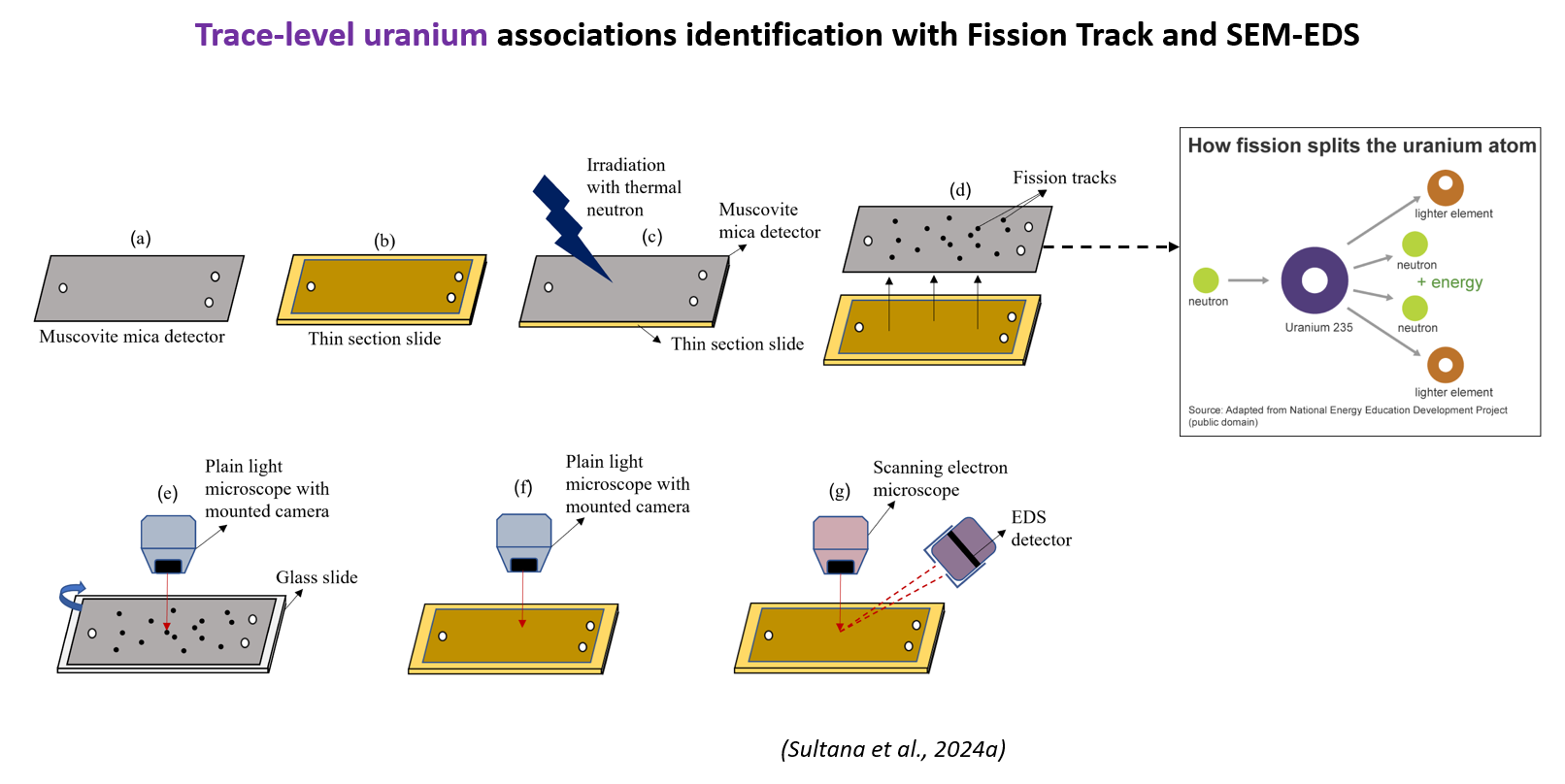
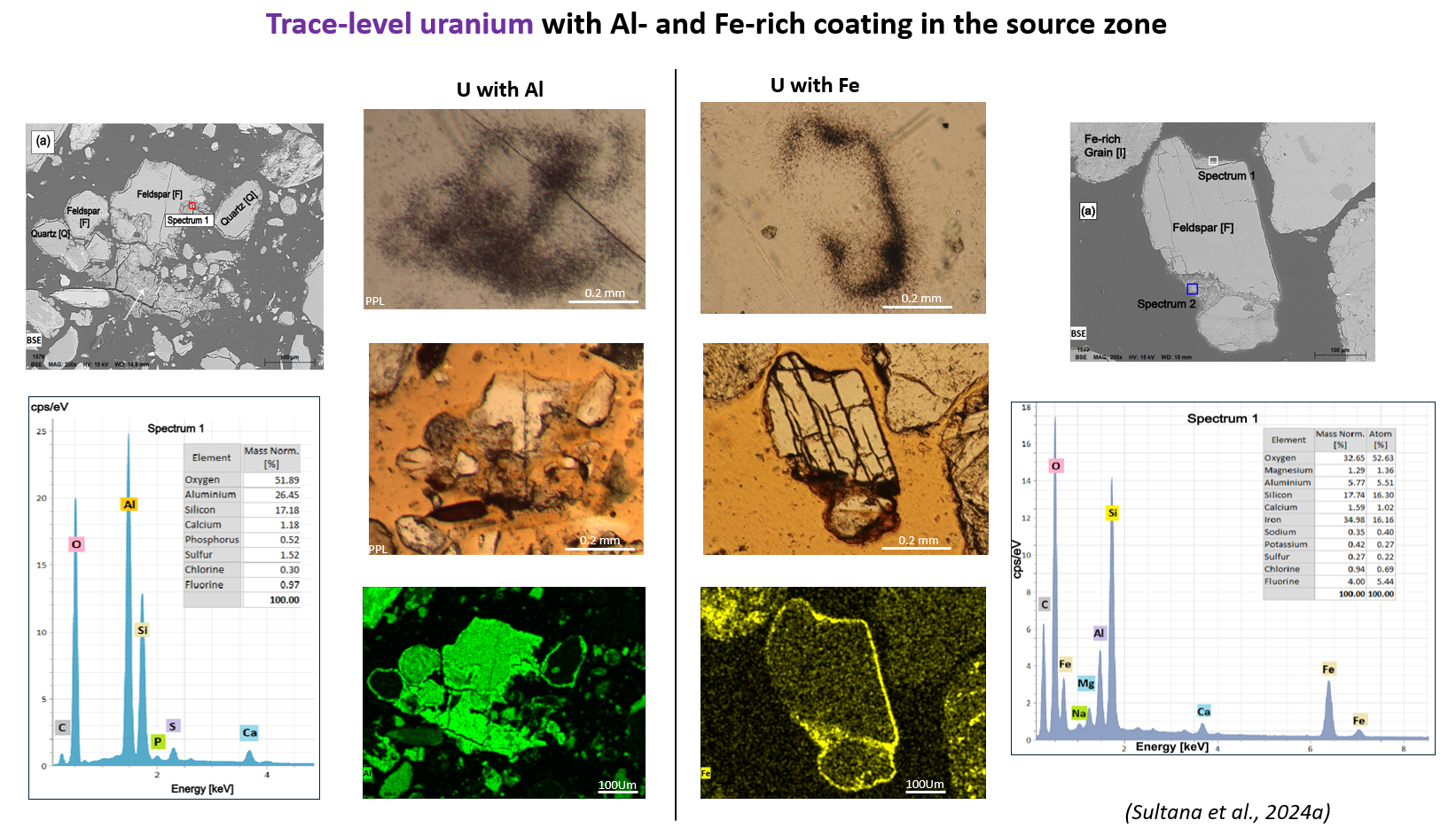
Residual solid-phase uranium from former mill tailings leachate can contribute to persistent concentrations of uranium in groundwater that exceed regulatory levels. Microscale characterization of uranium-contaminated sediment samples is lacking due to the challenges of detecting uranium at the parts-per-million level and identifying its associations with co-occurring elements. An emerging methodology, fission-track radiography, was applied to detect the low-level solid-phase uranium in sediments. Scanning electron microscopy and energy dispersive X-ray spectroscopy were used to elucidate the uranium associations with co-occurring aluminum, and iron. Uranium-contaminated sediments were collected from upgradient source zone aquifer sediments in Riverton, Wyoming, USA, where the residual uranium was present. The combined microscopic analyses revealed that in the water-saturated layers, solid-phase uranium primarily co-occurred with amorphous aluminum (Al)-rich and iron (Fe)-rich coatings in the source zone. The unique geochemical associations of solid-phase uranium with the co-occurring Al-rich and Fe-rich coatings, suggest that a select suite of equilibrium and kinetic reactions controls its persistence in groundwater. The identification of the uranium co-associations at a former uranium mill tailings site indicates that fission-tracks radiography with spectroscopic methods can be utilized in uranium-contaminated sites that contain trace-level solid-phase uranium and can inform conceptual and geochemical models for further mechanistic insight.
Sultana, R., Dangelmayr, M.A., Paradis, C.J., Johnson, R.H., 2024. Combining fission-track radiography and scanning electron microscopy to identify uranium host phases. Environ Earth Sci 83, 56. https://doi.org/10.1007/s12665-023-11373-5